The visible part of charging is a cable beside an aircraft. The more consequential work may sit beyond the airport boundary: agreeing a grid connection, providing electrical protection, arranging equipment maintenance and deciding what happens when the supply fails. An electric-aircraft proposal is incomplete if it treats those ground systems as somebody else’s problem.
For an informed traveller, this matters because infrastructure shapes reliability. A flight that has enough energy to reach its destination still needs a workable plan for its next departure. A charger installed for a demonstration does not establish that an airport can support repeated services, several aircraft arriving together or operations through a disrupted day.
Begin with the daily load, not one arrival
An airfield needs to distinguish energy demand over the day from the peak power required at a particular moment. Several aircraft seeking rapid charging at once can create a different requirement from the same total energy delivered gradually overnight. Terminal buildings, ground vehicles, heating and other airport equipment may already be using the available connection.
A credible energy study therefore starts with an operating schedule. It examines likely arrival times, ground periods, aircraft battery condition and the time needed for cooling or other checks. It then tests delays. If two flights arrive late together, can the system accommodate both, or must one wait? Those questions are more informative than a charger’s maximum advertised output.
Compatibility is more than the plug
Mechanical connection is only one part of compatibility. Voltage, power limits, communication, electrical protection, temperature limits and the aircraft’s approved procedures also matter. A charger cannot safely be assumed suitable because its connector looks familiar or because similar equipment serves road vehicles.
Standards organisations including SAE International, ASTM International and EUROCAE contribute to the broader technical environment around advanced aircraft and supporting systems. A reference to a standard should identify its edition, scope and relevance. “Standards compliant” is not a complete description, and work on a common approach is not proof that every aircraft and every charging installation can interoperate.
For each proposed combination, the operator needs to establish what the aircraft documentation permits and what the equipment supplier guarantees. Readers should be cautious when an infrastructure announcement names an airport but does not identify the aircraft, operating assumptions or stage of approval involved.
Design the stand as a workplace
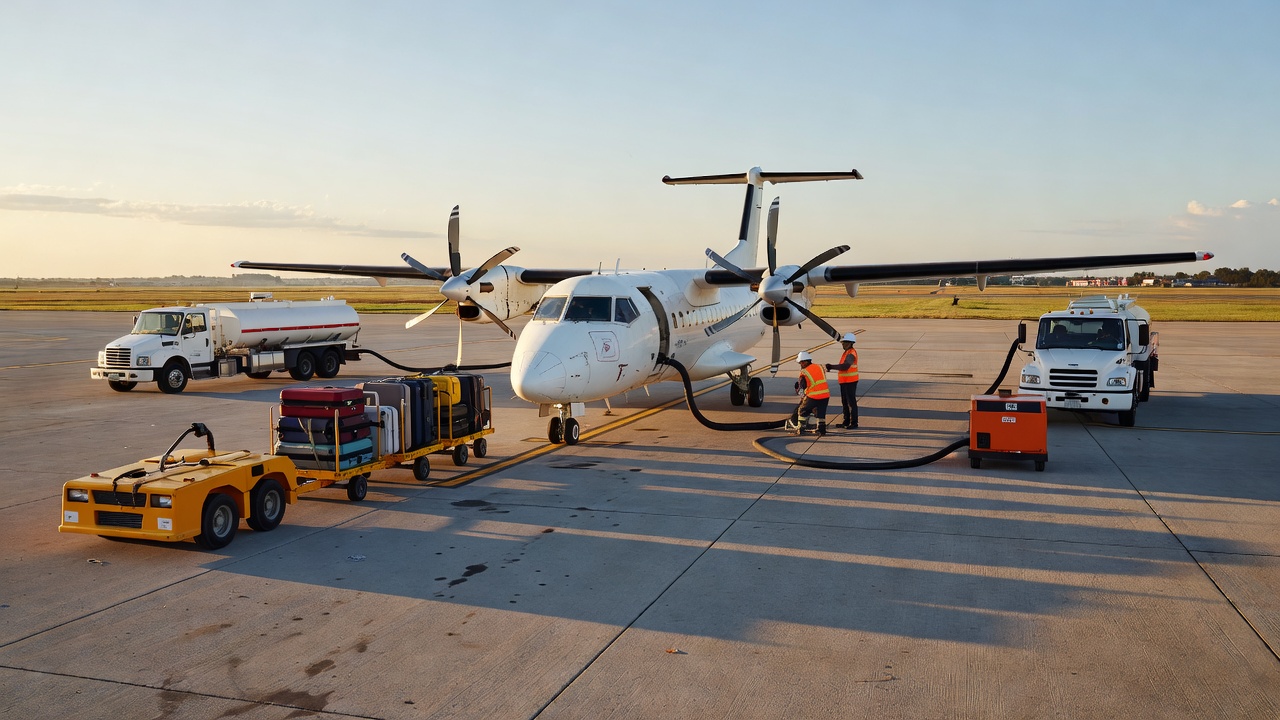
A charging point occupies space where people, vehicles and aircraft already move. Cable routing must account for trip hazards, vehicle paths and emergency access. Equipment needs protection from weather and accidental impact. Isolation, inspection and fault reporting need to be understandable to the people on shift, not merely documented by the design team.
Battery-related emergency planning is likewise a site-specific operational task. It requires coordination among the aircraft operator, airport, equipment providers and appropriate emergency services. This article is not an electrical installation or firefighting guide. Its point is that safe normal operation includes preparation for abnormal events, with procedures grounded in approved technical information and local requirements.
The charging stand is part of the transport system, not an accessory to the aircraft.Editorial synthesis; see the FAA airports resources and UK CAA airport guidance for regulatory context.
Storage can help, but it does not create energy
Stationary batteries may help an airfield manage peaks or make better use of a constrained connection. They bring their own cost, losses, replacement needs and safety obligations. They also need time and supply capacity to recharge. An energy store that works for a quiet test day may be insufficient for the busiest operating period.
On-site renewable generation can contribute to supply, but annual generation and instantaneous availability are different measures. A claim that an airfield produces as much electricity as it uses over a year does not establish that every flight charges directly from local renewable output. The accounting boundary and the physical operating plan should be described separately.
Plan the imperfect day
Resilience includes equipment redundancy, repair response, spare parts and access to appropriately trained staff. A diversion may bring an aircraft to an airport without compatible charging. A failed charger at the home base may disrupt several later flights. The response could involve a spare aircraft, schedule changes or a different energy strategy; each has financial and environmental consequences.
Public bodies such as the US Department of Energy and research organisations working on transport electrification provide useful background on grid integration. Airport planning, however, must remain local. A connection study in one region cannot establish available capacity, costs or delivery time at another site.
Ask what the announcement actually establishes
An airport memorandum, a pilot installation, a tested charging session and a commissioned service facility are distinct milestones. As of this guide’s review date, we do not treat a partnership announcement as proof of operational readiness. Look for evidence of the installed system, applicable approvals, staff preparation, aircraft compatibility and a realistic daily operating plan.
Electric aviation could alter the airfield’s relationship with energy in useful ways. The strongest proposals acknowledge that this is a coordinated infrastructure project. The aircraft, charger, grid connection and timetable have to work as one system, including on the day when one of them does not behave as expected.